test-apply-for-help

Apply for help

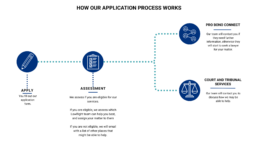
Use our online forms to apply for free legal assistance from our Court & Tribunal Services or Pro Bono Connect service.

These forms are designed to collect the information we need to assess your eligibility for assistance.

To be eligible, your legal issue must fall within the types of matters we can help with. You can find more information about the matters we assist with here.

Apply - Individuals and Couples

Apply - Group or Organisation

Apply - Individuals and Couples

Apply - Group or Organisation

Apply - Businesses

Contact Lawright

Apply - Businesses

Contact Lawright

Feedback and Complaints

LawRight Services

Feedback and Complaints

LawRight Services


test-info-law

Information About the Law

Quick Links to Our Resources

A-Z Factsheets

Changing the Law

Explore over 130 legal factsheets covering Queensland civil litigation, tribunal procedures, and general dispute resolution topics.

Read and download our formal submissions to government bodies, advocating for legal reform across defamation, parole, fines, mental health, and social justice made.

A-Z Factsheets

Explore over 130 legal factsheets covering Queensland civil litigation, tribunal procedures, and general dispute resolution topics.

Changing the Law

Read and download our formal submissions to government bodies, advocating for legal reform across defamation, parole, fines, mental health, and social justice.made.

Topic Guide

Use our alphabetical topic guide below to find resources on specific areas of law.

ADR & MEDIATION

BANKRUPTCY

BLUE CARDS

CHILD SAFETY

CONSUMER LAW

CORONERS

DEFAMATION

DISABILITY SCREENING

EMPLOYMENT

ENDURING POWER OF ATTORNEY

ENFORCING JUDGMENTS

ENVIORNMENT AND PLANNING

GOING TO COURT

GOING TO QCAT

GUARDIANSHIP

HEALTH CARE PLANNING

MALICIOUS PROSECUTION

MENTAL HEALTH

NOT-FOR-PROFIT

PERSONAL INJURIES

POLICE MISCONDUCT

PRISONERS

TIME LIMITS


test-pro-bono

Pro Bono Resources

Access essential tools and guides designed to support legal professionals and community workers. Explore resources ranging from disbursement funds to referral pathways to enhance access to justice for vulnerable clients.

Disbursement Fund

Refer a client to LawRight

Disbursement Fund

LawRight has established a fund to help pay for the disbursements of clients, when they are being represented pro bono or by a community legal centre.

Refer a client to LawRight

If you are finding pro bono help for someone, you can read about LawRight’s services and help someone fill out an application form.

LawRight has established a fund to help pay for the disbursements of clients, when they are being represented pro bono or by a community legal centre.

If you are finding pro bono help for someone, you can read about LawRight’s services and help someone fill out an application form.

Legal Health Check

Factsheets for the public

Legal Health Check

The Legal Health Check helps you identify your client’s legal needs and collaborate with free community lawyers to resolve these problems.

Factsheets for the Public

Factsheets containing information about the law, for the public and LawRight clients.

The Legal Health Check helps you identify your client’s legal needs and collaborate with free community lawyers to resolve these problems.

Factsheets containing information about the law, for the public and LawRight clients.

Limitation Schedule

Guidelines for solicitors

Limitation Schedule

A schedule of limitation dates for use by lawyers.

Guidelines for Solicitors

A guide for lawyers dealing with self-represented litigants.

A schedule of limitation dates for use by lawyers.

A guide for lawyers dealing with self-represented litigants.

LawRight Membership

Contact LawRight

LawRight Membership

LawRight members support strategic pro bono in Queensland. Join or renew your membership here.

Contact LawRight

LawRight members support strategic pro bono in Queensland. Join or renew your membership here.


Get legal help-new

Get legal help

Click each button to view options

Access essential legal information, detailed factsheets, and practical guides on all steps of the legal process, including how to represent yourself in court or tribunal proceedings.

Resource: Court and Tribunal Services - LawRight

We connect clients with complex civil law matters or public interest cases to volunteer private lawyers and barristers for free, full legal representation through our referral service.

Resource: Pro Bono Connect – LawRight

Queensland’s free specialist legal service provides integrated, holistic supports to people experiencing or at risk of homelessness. We help resolve issues related to housing, money, and violence.

Resource: CHJP

LawRight connects you with free legal assistance. Whether you’re representing yourself in civil court, experiencing homelessness, or facing other hardships, our network of pro bono lawyers, barristers, and law firms are ready to help you access justice.

Help for different courts

Click each button to view options

Get legal advice and assistance for specific civil matters in the Queensland Civil and Administrative Tribunal (QCAT), including guardianship, anti-discrimination, and reviews of disciplinary decisions.

Resource: QCAT

Receive free advice and help with drafting documents, submissions, and case preparation if you are representing yourself in civil proceedings in the Queensland District Court.

Resource: Queensland District and Supreme Courts and Court of Appeal – LawRight

Access the Self-Representation Service for advice and assistance with non-family law Federal Court matters, such as anti-discrimination, bankruptcy, and judicial review.

Resource: Federal Court and the Federal Circuit and Family Court of Australia – LawRight

Assistance for self-represented litigants navigating complex civil procedure in the Queensland Supreme Court, including help with pleadings, affidavits, and preparing for hearings.

Resource: Pro Queensland District and Supreme Courts and Court of Appeal – LawRight

Specialized advice and assistance for preparing applications, submissions, and responding to appeals in the Queensland Court of Appeal.

Resource: Queensland District and Supreme Courts and Court of Appeal – LawRight

Help with homelessness law

Click each button to view options

Get help with resolving legal issues related to fines, consumer debt, and credit that contribute to financial disadvantage and instability.

Resource: CHJP

Specialized legal support for people at risk of homelessness due to domestic and family violence, including assistance with related housing, money, and safety matters.

Resource: CHJP

Targeted, integrated legal help for children and young people experiencing or at risk of homelessness, provided in collaboration with youth and community services.

Resource: CHJP


Blue Card factsheet selection

Need to apply to QCAT for a review of a Blue Card related decision?

Choose the option below to get started


Applying to QCAT for review of a Blue Card related decision post Sept 2025

Applying to QCAT for review of a Blue Card related decision (after 20 September 2025)


This factsheet is for applicants who commence their review proceedings in QCAT after 20 September 2025. If you commenced your proceeding before 20 September 2025, please click here.

If you were given a negative notice between 23 August 2025 and 19 September 2025 and have not applied to QCAT for a review of the decision. You may be eligible to ask Blue Card Services to redetermine your application under the amended Act. Check your negative notice for details or contact Blue Card Services. If you need legal advice, please apply for our assistance here.

The Queensland Civil and Administrative Tribunal (QCAT) can review certain Blue Card related decisions made under the Working with Children (Risk Management and Screening) Act 2000 (Qld) (WWC Act)

This factsheet is written for persons who are unfamiliar with that legislation.

Blue Card Services

  • Blue Card Services (BCS), a public service unit administered by the Department of Justice and Attorney-General. Since 1 October 2016, the Department is responsible for regulating the issue of Blue Cards and Exemption Cards, which are mandatory for people employed or volunteering in certain child-related positions in Queensland. Blue Card Services was previously administered by the Public Safety Business Agency.
  • Blue Cards are issued to eligible persons working or volunteering in regulated areas, including sport, education, childcare services and the care of children under the Child Protection Act 1999 (Schedule 1 WWC Act).
  • Exemption Cards are issued to eligible registered teachers and police officers in Queensland providing regulated services to children outside of their professional duties.
  • When the BCS receives a Blue Card application, BCS must either approve the application or refuse the application. If the application is refused, a negative notice must be issued (section 226 WWC Act).
  • In some cases, BCS must issue a Blue Card unless they are satisfied that the person poses a risk to the safety of children (section 230 (2) WWC Act). That may happen, for example, if a person has been convicted of an offence other than a serious offence (as defined in Schedule 2 WWC Act). In this instance, Blue Card Services will conduct a risk assessment (section 230 (3) WWC Act) 
  • In other cases, BCS must issue a negative notice unless the case is exceptional (section 229 WWC Act). That may happen, for example, if a person has been convicted of a serious offence or was previously classified as a disqualified person.
  • If a person does not agree with a decision of BCS about a Blue Card, the person may be able to apply to QCAT for review of the BCS decision.

Applying to QCAT for review of a BCS decision

  • A person can only apply to QCAT for review of a BCS decision if the person is not disqualified from applying under the WWC Act. Also, only certain BCS decisions can be reviewed by QCAT (sections 353 and 354 WWC Act).
  • BCS decisions that can be reviewed by QCAT are called chapter 8 reviewable decisions and are set out in section 353 WWC Act. They include, for example, a decision to issue a negative notice.

What is the limitation period to apply to QCAT?

  • A limitation period is the length of time within which legal action must be started. If legal action is not started within that time, a person may be prevented from commencing any action, even if it has legal merit.
  • A person applying to QCAT for review of a BCS decision must file a review application in QCAT generally within 28 days from the day the person receives notice of the decision (sections 353 and 354 WWC Act).
  • QCAT may grant an extension of time for a person to file a review application in certain circumstances (section 61 QCAT Act).

QCAT review of Blue Card related decisions

  • QCAT decides to review applications by way of a fresh hearing (section 20 QCAT Act).
  • A review by QCAT is undertaken under the principle that the rights and well-being of children are paramount (section 360 WWC Act). That means that the right of children to be protected from risk of harm prevails over a person’s right to hold a Blue Card.
  • Like BCS, QCAT also applies the law set out in the WWC Act. For example, if QCAT is reviewing a decision to cancel a Blue Card because a person’s police information has changed, QCAT must conduct a risk assessment to decide whether a person poses a risk to the safety of children.

Risk Assessment (section 232)

    • QCAT conducts a risk assessment by:
      • Considering any assessable information which includes:
        • Police information
        • Domestic violence information
        • Disciplinary information
        • Adverse interstate WWC information; and
        • Other information the Chief Executive reasonably believes is relevant to deciding whether the person poses a risk to the safety of children
      • If the matter is referred to an advisory committee – considering the advice or recommendations of the advisory committee.
      • If an expert advisor is appointed – considering the advice of the expert advisor.
      • Deciding whether the person poses a risk to the safety of children, by applying the reasonable person test (see below).
    • In deciding whether a person poses a risk to the safety of children, QCAT will consider the below factors in relation to the conduct and alleged conduct disclosed in the assessable information (section 234 WWC Act): 
      • the nature, gravity and circumstances of the conduct;
      • how the person’s conduct is relevant to engaging in regulated employment or the carrying on of a regulated business;
      • how long ago the person’s conduct occurred;
      • if the person’s conduct involved the commission of an offence or another act against another person (the victim) –
        • the victim’s vulnerability at the time of the conduct; and
        • the age difference between the person and the victim at the time of the conduct; and
        • the person’s relationship to, or position of authority over, the victim at the time of the conduct;
      • whether the person’s conduct indicates a pattern of concerning behaviour;
      • the person’s conduct since the conduct
      • if the person is an Aboriginal person or Torres Strait Islander person – the effect of –
        • systemic disadvantage and intergenerational trauma; and
        • the historical context and limitations on access to justice;
      • any information given by the person in, or in relation to, the application;
      • any other circumstances relevant to the person’s conduct;
      • any other matters the chief executive considers relevant.
    • For QCAT to decide that a person poses a risk to the safety of children, they –
      • Must be satisfied there is a real possibility that the person will pose a risk to the safety of children; and
      • Does not need to be satisfied that it is likely the person will pose a risk to the safety of children.

The reasonable person test (section 233)

  • QCAT may decide a person does not pose a risk to the safety of children only if they are satisfied that a reasonable person would allow their child to have direct contact with the person –
      • whether supervised or unsupervised by another person; and
      • while the person is engaged in regulated employment or carries on a regulated business.
  • Direct contact means contact between a person and a child that involves one or more of the following forms of contact: physical, face to face, contact by phone, post or email or other forms of written, oral or electronic communication.
  • QCAT decisions about Blue Card review proceedings are published by the Queensland Supreme Court Library and can be found here.

QCAT pre-hearing process

  • When QCAT receives a valid application seeking review of a BCS decision (QCAT Form 23), QCAT serves a copy of the application on BCS.
  • Within 28 days from receiving a copy of the review application, BCS must file in QCAT a written statement with reasons for the decision (section 21 QCAT Act).
  • The BCS statement of reasons includes all documents and information that BCS used to make its decision, including for example information received from the police, Director of Public Prosecutions, Corrective Services, Child Services, the Mental Health Court and the Mental Health Review Tribunal.
  • QCAT may make orders about how a review of application will progress and direct the parties to attend one or more compulsory conferences.
  • QCAT cannot suspend a BCS decision until a review application is decided (section 354 WWC Act). That means that the filing of a review application in QCAT does not affect the operation of a BCS decision.

QCAT hearing

  • The hearing of a Blue Card review application is held in private, and only persons authorised by QCAT are allowed to attend. The parties present at a hearing are usually the applicant, a BCS representative, lawyers if the parties are legally represented, support persons and witnesses while they are giving evidence (section 361 of the WWC Act).
  • There are special provisions in the QCAT Act and the WWC Act about special witnesses giving evidence, including children and people who QCAT consider may be disadvantaged due to a mental, intellectual or physical impairment (section 99 QCAT Act; sections 364- 367 WWC Act).
  • QCAT decisions involving children or vulnerable people are de-identified if they are published, to protect the identity of these parties. However, other details of the case may be published unless QCAT makes a non-publication order.
  • QCAT may make a non-publication order on its own initiative, or if a party to the proceeding applies for the order (section 66 QCAT Act; QCAT Form 40).

Post hearing process

  • QCAT may decide a review application at the hearing or deliver its decision at a later date, for example if the presiding member needs more time to consider the matter or gather information.
  • When deciding the application QCAT may either:
    • confirm a BCS decision;
    • amend a BCS decision;
    • substitute a BCS decision by its own decision; or
    • set aside a BCS decision and return the matter to BCS for reconsideration, with any directions QCAT considers appropriate (section 24 QCAT Act).
  • If QCAT grants a review application, BCS cannot issue a Blue Card until the limitation period to appeal the decision (section 143 QCAT Act) has lapsed (section 354A WWC Act).

Appeals

  • Appeals are very technical legal proceedings. Appeal rights, either to the QCAT Appeal Tribunal or to the Queensland Court of Appeal, will depend on whether the appeal relates to a question of law or fact, and whether a matter was heard by a judicial member.
  • If a person is considering appealing a QCAT decision, it is strongly recommended that the person apply for reasons for the decision and obtain legal advice before filing an appeal.
  • A person can request written reasons for a QCAT decision within 14 days from the decision taking effect (section 122 QCAT Act). A decision generally takes effect on the date it is made, unless QCAT provides otherwise.

For more information, refer to the Appeals factsheet on the LawRight website.

Costs

  • There is no filing fee to apply to QCAT for review of a Blue Card decision of BCS.
  • For information about costs orders, refer to the Costs in QCAT factsheet on the LawRight website.


Disclaimer

The information in this resource is for general information purposes only and should not be relied on as legal advice. If you need legal advice, please contact LawRight or another lawyer. LawRight can only give advice to people who are eligible for our services.


Unpaid entitlements claims in the Federal Circuit and Family Court

Unpaid entitlements claims in the Federal Circuit and Family Court 

What is this factsheet? 

This factsheet sets out the process for making a claim for unpaid entitlements under the Fair Work Act 2009 (Cth) (the FWA) in the Federal Circuit and Family Court (Division 2) (the FCFC).  

This factsheet only covers claims for employees covered by the Fair Work system. See the Fair Work Ombudsman’s guidance on the Fair Work system for more information. 

What is an unpaid entitlements claim? 

You may have a claim for unpaid entitlements if your employer or former employer has not paid you any amounts you are legally entitled to, and which are connected to your employment. 

For example, your employer may have underpaid you (or not paid you at all): 

  • your wages – i.e. the amount you are owed for performing work. For example, they might have paid you at the incorrect rate of pay, not paid you overtime, or not paid you penalty rates; or 
  • other entitlements, for example amounts owed for leave, breaks, commission, or allowances. 

There must be a legal basis for the entitlements you say you are owed. For example: 

  • the National Employment Standards (the NES) in FWA (see from s 59) – which contain the minimum safety net entitlements; 
  • a contract of employment – if you have one (either written or verbal); 
  • an Award or Enterprise Agreement – if such an instrument covers your employment;  
  • a National Minimum Wage Order – if one applies; and/or  
  • a workplace determination or equal remuneration order made by the Fair Work Commission – if one applies. 

If your employer or former employer has not paid you your entitlements, they may have contravened the following sections of the FWA: 

  • section 44 – if they contravene the NES; 
  • section 45 – if they contravene the term of an Award; 
  • section 50 – if they contravene an Enterprise Agreement; and/or 
  • section 323 – if they do not pay you in full amounts payable in relation to the performance of work. 

What should I do first? 

Letter of demand 

We recommend that before you start court proceedings, you should try to resolve your claim outside of court.   

To do so, we would recommend sending a letter of demand to the employer. Sending a letter of demand can often result in a successful outcome, without the need to take further steps. 

Generally, a letter of demand for unpaid entitlements should include the following: 

  • the background to your claim – i.e. what has happened to date; 
  • the unpaid entitlement/s claimed and its legal basis – e.g. overtime under your contract of employment; 
  • the amount you are claiming; 
  • a demand for payment of the amount by a specified date; and 
  • the next steps you intend to take if the employer does not pay you the amounts demanded – e.g. starting court proceedings. 

Contact the FWO 

You may wish to raise your concerns about unpaid entitlements with the Fair Work Ombudsman (the FWO) by submitting an online enquiry or calling them. The FWO may be able to help you to resolve your unpaid entitlements claim without you having to commence court proceedings. 

Contact the ATO 

If your matter relates to superannuation, you can make a complaint to the Australian Taxation Office (the ATO). 

What if I can’t resolve the matter outside of court? 

If you cannot resolve the matter outside of court, you may wish to consider starting court proceedings. 

Before starting proceedings, you should consider that court proceedings are likely to be stressful and time-consuming and can take many months from start to end. If you are representing yourself, you will also need to prepare court documents, prepare evidence, and appear at court hearings. You will also have to pay court fees, unless you can get a fee waiver, and there is a risk (although limited) that you will have to pay the employer’s legal costs in some situations. 

Time limit for starting proceedings 

The time limit for starting a court proceeding claiming unpaid entitlements is 6 years from the date that the entitlement was meant to be paid. 

For example, if you were not paid an amount that was due to be paid on 1 July 2024, you must start court proceedings in relation to claiming that amount by 1 July 2030.  

This time limit is calculated from each separate occasion or instance where you are claiming an unpaid entitlement. For example, if you were paid the incorrect rate of pay for an entire year, every pay period in that year would be a separate instance when you are calculating your time limit to start proceedings. For this reason, it is often useful to focus on the first instance of an unpaid entitlement and use that as a deadline to give yourself for when you need to commence any proceeding. This ensures that you stay within the time limit for every unpaid entitlement that comes after that initial date. 

Where should I start court proceedings? 

You can start an unpaid entitlements claim in the FCFC. 

If your claim is less than $100,000 (previously $20,000 before 1 July 2023), you may choose to commence proceedings under the FCFC’s small claims procedure. The procedure is more informal than under the general Fair Work division, making it more accessible to self-represented litigants.  For example, matters are managed by a registrar rather than a judge, and companies cannot be legally represented without the court’s permission. For more information, see the FCFC’s guidance. 

If your claim is for $100,000 or more, or you do not want to proceed under the small claims procedure, you could start proceedings in the general Fair Work division of the FCFC. 

You could also start proceedings in the Federal Court of Australia (FCA) – however, the FCA generally only hears claims that are large and/or complex. 

In Queensland, you may be able to commence proceedings in the Queensland Industrial Relations Commission (QIRC), Industrial Magistrates Court of Queensland, or the Magistrates Court of Queensland. This is not covered in this factsheet, but you can see the QIRC’s guidance for more information. If you are in another State or Territory, you should seek advice about whether you can commence proceedings outside the Federal Courts system. 

How to make a small claims application 

To apply to the FCFC under the small claims procedure, you must file: 

  1. an Application form – Fair Work Division;  and 
  2. a Form 5: Small claim under the Fair Work Act 2009, annexing any supporting evidence.  

Once you have completed these forms, you will need to file your application with the Court. This can be done online through the court’s electronic filing system, in person or, in certain circumstances, by email.  

When you file your documents, you will need to pay a filing fee. A list of the payable fees is available on the FCFC’s website. In some circumstances, you may be exempt from paying court fees, for example if you are a concession card holder or experiencing financial hardship. Further information on fee exemptions, see our fee waiver guide 

In your forms, you will need to outline your claim for unpaid entitlements and identify the correct party (or parties) to bring the proceedings against (usually your employer). In certain circumstances, you may be able to bring proceedings against other people (e.g. a director, human resources manager, etc.) involved in the underpayments under the accessorial liability provisions (FWA s 550).   

After filing your forms, you must ‘serve’ the application on your employer along with any other party you have commenced proceedings against (known as the respondent/s). This means providing a copy to your employer so they can respond to your claims. This must be done at least seven days before the date of the first hearing. After the documents have been served, you will need to complete an Affidavit of service. Further information about service is available in our service factsheet 

Small claims hearings 

Generally, your first court date will be within few months of your claim being filed. Small claims matters may be resolved at the first hearing. However, you may be ordered to attend a conciliation conference, or the hearing may be adjourned (postponed) to a later date. You may be asked to do certain things before your next hearing, for example, file more evidence or documents.      

If your matter is referred for a conciliation conference, you must attend and participate in the process. A conciliation conference is a type of court-ordered mediation and allows you and the employer to meet and work with a Registrar in an attempt to come to a resolution with each other without the need to continue through a formal court process. You should be prepared to present your case at the conciliation conference and have a general idea of what you would be prepared to accept to resolve the dispute. If your matter is resolved at the conciliation conference stage, you will not need to attend the final hearing before a judge.  

If you are not able to resolve the matter through conciliation or at the first hearing, your claim will generally be heard and decided by a judge. You may need to attend a directions hearing or mention before your final hearing to set up a timeline for next steps in your proceedings. 

How to make a claim in the Fair Work Division  

For claims for unpaid entitlements over $100,000, or where you do not elect to be covered by the small claims procedure, proceedings should instead be commenced in the Fair Work Division of the FCFC.  

To commence proceedings, you will need to file and serve: 

  1. an Application form – Fair Work Division; and  
  2. an affidavit outlining your statement of facts and including any documentary evidence you intend to reply upon.  

Alternatively, statement of claim or points of claim may be filed with the Application form instead of an affidavit. This should be done in accordance with Part 16 of the Federal Court Rules 2011 (Cth). 

Please see above under “How to make a small claims application” for information about accessorial liability, filing and serving.  

Fair Work hearings 

After your documents have been filed, you will be given a first court date. This will be a directions hearing to set up a timeline for your court proceedings. A final court date may be set in addition to other orders such as when you need to file certain documents.  

You may have further directions hearings or an interlocutory hearing to deal with a specific issue before your final hearing. The final hearing is where you present your case to the judge. Further information on what to expect at different hearings is available on the FCFC’s website. You may also be ordered to attend a conciliation conference before the final hearing.  

Outcomes of unpaid entitlements claims 

You may be able to settle your dispute with your employer through informal negotiation with your employer or a court-ordered conciliation if you have commenced proceedings.  

However, if your claim is not able to be resolved through alternative dispute resolution, then your matter will be decided by the court. 

The court may order that part or all of your claimed unpaid entitlements be paid by your employer. For information on how to enforce an order, see Enforcement of monetary decisions in the Federal Circuit and Family Court. 

However, if you are unsuccessful, in limited circumstances, the court may order you to pay the other party’s legal fees (also known as costs). Generally, parties in Fair Work matters pay their own costs regardless of the outcome. However, you may be liable to pay costs if the proceedings were started vexatiously or without reasonable cause. 


Disclaimer

The information in this resource is for general information purposes only and should not be relied on as legal advice. If you need legal advice, please contact LawRight or another lawyer. LawRight can only give advice to people who are eligible for our services.


Defamation – publications before 1 July 2021

Defamation – publications before 1 July 2021

This factsheet sets out the law that applies to actions in defamation where the defamatory material was published before 1 July 2021. For details about the law that applies to actions in defamation where the defamatory material was published on or after 1 July 2021, see this factsheet.

Defamation is a tort, or a civil wrong, which occurs when defamatory material relating to an individual is published. Material will be defamatory if it could:

      • injure the reputation of the individual by exposing them to hatred, contempt or ridicule;
      • cause people to shun or avoid the individual; or
      • lower the individual’s estimation by right thinking members of society.

There are three elements that must be proved for a defamation action:

            1. the material was communicated by the defendant to a third person other than the plaintiff (publication);
            2. the material identifies the plaintiff (identification); and
            3. the material contains matter that is defamatory, regardless of whether the matter was intentionally published or not (defamatory matter).

Provided that no defences are applicable, if the elements are satisfied then the defendant will be liable to pay damages to the plaintiff to compensate him or her for the damage caused to his or her reputation. Defences are further discussed below.

There is no distinction between defamation communicated in writing and defamation communicated verbally. Both are actionable.

Defamation law in Australia

In Australia, all the States and Territories have defamation legislation that is substantially the same, which means that defamation law is mostly consistent across the country.

The courts in each State and Territory as well as the Federal Court of Australia have jurisdiction to hear defamation matters.  This means that, depending on the circumstances of a particular matter, a person might be able to choose which court to start defamation proceedings in. There might be specific practical or strategic reasons why a plaintiff would choose to start proceedings in a particular court, especially because different procedural rules apply in different courts. If you are considering starting court proceedings and are not sure which court you should start your proceedings in, you should seek legal advice.

This factsheet focuses on Queensland law and court proceedings brought in the Queensland courts.

What is the relevant legislation?

The Defamation Act 2005 (Qld) (Defamation Act) governs the law of defamation in Queensland.

The Defamation Act was amended on 1 July 2021, and the current version of the Defamation Act applies to all actions in defamation where the defamatory matter was published on or after 1 July 2021. See this factsheet for information about the law that applies to defamatory matters published on or after 1 July 2021.

If the defamatory matter was published before 1 July 2021, the previous version of the Defamation Act will apply. This factsheet sets out the law under that version of the Defamation Act.

You can find a copy of the Defamation Act here: Defamation Act 2005 (Qld) (reprint current from 1 January 2016 to 30 June 2021)

Who can sue for defamation?

Under the Defamation Act, the following can be a plaintiff:

      • A person; or
      • A corporation (that is not a public entity), if it is either:
        • a not for profit organisation; or
        • it employs fewer than 10 people and is not related to another corporation.

A corporation that does not fit the criteria above cannot sue for defamation under the Defamation Act. This limitation was introduced in response to community concern that large corporations were able to use a threat of defamation to suppress legitimate public criticism and debate.

In addition, a person cannot claim defamation or continue an existing action for defamation in relation to the publication of defamatory matter about a deceased person.

Who can be sued for defamation?

Any natural person or legal entity including local governments, companies and incorporated associations may be liable for defamation.

Any person who contributed to the publication may also be held liable, including but not limited to the original author, the publisher, journalists, television and/or radio stations, and the administrator or host of the website where the publication was made.

A person cannot claim defamation or continue an existing action for defamation in relation to a publication that was made by a person who has died since publishing the matter.

Time frame to bring an action

The Limitation of Actions Act 1974 (Qld) (Limitation Act) sets out the time limits for bringing an action in defamation.

Like the Defamation Act, the Limitation Act was amended on 1 July 2021, and the current version of the Limitation Act applies to all actions in defamation where the defamatory material was published on or after 1 July 2021.

If the defamatory material was published before 1 July 2021, the previous version of the Limitation Act will apply. Under that Act, an action in defamation must be brought within 1 year from the date of the publication of the matter complained of. This may be extended to 3 years from the date of publication if the court is satisfied that the action could not reasonably have been commenced within 1 year.

Elements of civil defamation – Defamation Act 2005

The Defamation Act does not define the meaning of the elements of a defamation action. Instead, they are defined by the common law, or the body of “judge-made” law that has been developed through cases decided by the courts.

In order to succeed in a defamation action, the plaintiff needs to satisfy four elements:

          1. Publication;
          2. Identification; and
          3. Defamatory matter.

1. Publication

Publication means that the material is made known to a third person other than the person being defamed. Publication can be oral, in writing or in pictures.

Publishing occurs in each place the material is seen or heard, thus every time defamatory matter is repeated to a third person, a separate publication occurs.

2. Identification

The plaintiff must be able to show that the defamatory matter could reasonably be taken to be about them. It is a question of whether an ordinary reasonable person having knowledge of the relevant circumstances would read the material as referring to the plaintiff. This is most easily satisfied when the publication actually names the plaintiff. However, there is no need for the plaintiff to be expressly named. It is enough that the publication is made to persons with knowledge of other facts which would reasonably enable them to identify the plaintiff.

3. Defamatory matter

Whether a matter is defamatory will depend on the circumstances of each individual case.

First, the question is whether the material was capable of conveying the defamatory meaning alleged by the plaintiff to an ordinary person.

If so, then the question is whether an ordinary person would have taken the publication as conveying the meaning alleged by the plaintiff.

In answering these questions, the standard to be applied is what the ordinary reader, listener or viewer would understand or infer from the statement. The audience is taken not to have any special prejudices. The actual intention of the person making the statement is irrelevant.

There are three ways that a statement can convey a defamatory meaning (otherwise known as an imputation):

          1. On the natural and ordinary meaning of the words: the meaning coming from a literal reading of the words.
          2. The court may find that the statement is a false innuendo. In other words, there is a secondary meaning which comes from reading between the lines.
          3. The statement may be a true innuendo. This is where the alleged meaning arises from the natural and ordinary meaning of the words being read in light of other facts not mentioned in the publication. The statement must be published to at least one person who knows of other facts.

The defamatory meaning can be directly stated or it can be implied. An implication that arises from another implication is not actionable. This is important in the context of criminal allegations. A statement that somebody is charged with a crime carries the implication that the person is suspected of committing that crime; to conclude that this means the person did in fact commit the crime requires a second implication, and would not be actionable.

It is possible that a single statement may convey several defamatory meanings. However, multiple imputations in the same publication will only give rise to one cause of action. This means that a plaintiff cannot take several actions against a defendant in relation to a single publication.

Defences to civil defamation

There are several defences available under the Defamation Act. It is important for the aggrieved party to consider what, if any, defences may apply, as this may help to determine the likelihood of success in a defamation action and whether it is worthwhile to commence an action.

The defences available under the Defamation Act are:

        1. Justification;
        2. Contextual truth;
        3. Absolute privilege;
        4. Publication of public documents;
        5. Fair report of proceedings of public concern
        6. Qualified privilege;
        7. Honest opinion;
        8. Innocent dissemination; and
        9. Triviality.

In addition to these defences, the courts have recognised several defences that arise independently of the Defamation Act. These ‘general law’ defences can be raised as well as the defences under the Defamation Act.

Justification: section 25 of the Defamation Act

It is a defence to the publication of defamatory matter if the defendant proves that the defamatory allegations are substantially true. Substantially true is defined as being “true in substance or not materially different from the truth”.

A defendant is not required to prove the truth of every detail contained in the defamatory matter. Rather, a defendant must prove the truth of every material part of the imputation relied upon by the plaintiff.

Contextual truth: section 26 of the Defamation Act

The defendant will not be liable for the publication of defamatory material if the defendant can prove that:

      • in addition to the defamatory imputations, the matter contained one or more other imputations that are substantially true (the contextual imputations); and
      • as a result of the substantial truth of the contextual imputations, the plaintiff’s reputation was not further harmed by the defamatory imputations.

Absolute privilege: section 27 of the Defamation Act

If the defamatory material was published on an occasion of absolute privilege, the defendant will not be liable. Occasions of absolute privilege are statements made:

      • during the course of proceedings of a parliamentary body;
      • during the course of an Australian court/tribunal hearing; and/or
      • on an occasion that, if published in another Australian jurisdiction, would constitute absolute privilege in that jurisdiction.

The rationale for this section is that there are certain occasions where freedom of expression is so important to society (such as the enactment of laws by parliament and the determination of legal issues by courts) that absolute protection should be afforded.

Publication of public documents: section 28 of the Defamation Act

It is a defence if it can be proved that the material in dispute was contained in a public document, or a fair copy, summary or extract from a public document.

A public document includes, but is not limited to, reports by a parliamentary body, a judgment by a court, government documents and records open to the public.

Fair report of proceedings of public concern: section 29 of the Defamation Act

A person will have a defence to the publication of defamatory matter if they prove the matter was, or was contained in, a fair report of any proceedings of public concern. Proceedings of public concern include those of a parliamentary body, international organisations and conferences, international and domestic courts and tribunals, sport/recreation/trade associations, Ombudsman’s reports and other proceedings that are treated as proceedings of public concern.

This defence will be defeated if the plaintiff can prove that the defamatory material was not published honestly to either inform the public nor to advance education.

Qualified privilege: section 30 of the Defamation Act

The defendant will not be liable for the publication of a defamatory matter if they can prove that:

      • the recipient of the publication has an interest or apparent interest in having information on some subject;
      • the matter is published to the recipient in the course of giving to the recipient information on that subject; and
      • the conduct of the defendant in publishing that matter is reasonable in the circumstances.

This protection is qualified because the privilege can be lost if abused or misused. If it is proven that the publication was motivated by malice, the defence will be unsuccessful.

Honest opinion: section 31 of the Defamation Act

The defendant will not be liable for the publication of a defamatory matter if they can prove that:

      • the matter was an expression of opinion (as opposed to a statement of fact);
      • the opinion related to a matter of public interest; and
      • the opinion is based on proper material.

The opinion is based on proper material if it is substantially true, published on an occasion of qualified privilege, or the defences of publication of public documents or fair report of proceedings of public concern apply to the publication.

If the plaintiff can prove that the opinion was not honestly held at the time of the publication, the defence will be unsuccessful.

Innocent dissemination: section 32 of the Defamation Act

This defence applies where the defamatory publication was disseminated by an employee or agent of a subordinate distributor (i.e. not the author of the matter or first distributor of the matter). The defendant must have been unaware that the publication was defamatory and this lack of knowledge must not have been due to the defendant’s negligence.

This defence is of particular significance to booksellers, newsagents and broadcasters of live programs as they are not the original source of the defamatory publication.

Triviality: section 33 of the Defamation Act

There is a defence to an action where the circumstances of the publication of the defamatory material were such that the plaintiff was unlikely to suffer any harm.

General law defences

In addition to the defences described above, the courts have recognised several defences that arise independently of the Defamation Act. The Defamation Act provides that a party may raise any of these defences to resist an action for defamation. Many of these defences are similar to the defences contained in the Defamation Act, and so do not add much to the available range of defences.

One example of a general law defence is the common law defence of qualified privilege. The defendant will have a defence if they can establish that they had a duty in making the publication, and that those to whom the publication was made had a duty or interest in receiving it. This defence extends to protect publications concerning government or political matters that affect the Australian people, because of the implied freedom of political communication in the Constitution. This means that certain material that is otherwise defamatory may be protected if it is a fair and accurate report of parliamentary or judicial proceedings, or public meetings concerning matters of public interest. The defendant must not believe that the imputation was untrue nor can the publication be actuated by malice.

Resolution of defamation disputes without litigation

Part 3 of the Defamation Act contains provisions regarding the resolution of civil disputes without recourse to litigation. The aim of these provisions is to help people resolve their disputes without having to resort to a court case, which can be time-consuming and expensive.

Division 1 deals with offers to make amends. Division 2 relates to apologies.

Offers to make amends

The person who published the matter in question (the publisher) may make an offer to make amends to the aggrieved person to prevent further legal proceedings from taking place. Promptly correcting a mistake or issuing an apology will aid a defence to a defamation action.

The offer to make amends must be made within 28 days of receiving a “concerns notice” or before serving a defence in the court proceedings.

A concerns notice is a notice in writing of what the aggrieved person considers to be the relevant defamatory material. If a concerns notice is received which inadequately describes the alleged defamatory material, the publisher can issue a “further particulars” notice to request further information. The aggrieved person must reply within 14 days for their concerns notice to remain effective.

An offer to make amends must:

      • be in writing;
      • be identifiable as an offer to make amends under Division 1, Part 3 of the Defamation Act;
      • if the offer is limited to any particular defamatory imputations – state that the offer is limited and specify the relevant imputations;
      • include an offer to publish, or join in publishing, a reasonable correction of the matter in question;
      • if material containing the potentially defamatory matter has been given to someone else by the publisher or with the publisher’s knowledge – include an offer to take, or join in taking, reasonable steps to tell the other person that the matter is or may be defamatory of the aggrieved person; and
      • include an offer to pay the expenses reasonably incurred by the aggrieved person both before the offer was made and in considering the offer.

The offer to make amends can include any other kind of offer or details the publisher wants to make or include, such as an offer to publish an apology, an offer to pay compensation, or details of any correction or apology made before the date of the offer.

The effect of accepting such an offer is that the aggrieved person cannot assert, continue or enforce any action for defamation against the publisher in relation to the matter in question, even if the offer was limited to particular defamatory imputations.

If an offer to make amends is not accepted, then the publisher has a defence to an action for defamation if they can establish that:

      • they made the offer as soon as possible after becoming aware that the matter is or may be defamatory;
      • at any time before the trial they were ready and willing, on acceptance of the offer, to carry out the terms of the offer; and
      • in all the circumstances the offer was reasonable.

Apologies

An apology made in connection with any defamatory matter published does not constitute an admission of fault or liability on the publisher’s behalf. Evidence of an apology is not admissible in any civil proceedings as evidence of the fault or liability of the person in connection with that matter. However, apologies are relevant to the mitigation (or lessening) of damages.

Litigation

A claim for defamation may be lodged in either Supreme Court or District Court (depending on the amount of damages being claimed).

A claim for defamation may also be lodged in a Magistrates Court. However, proceedings commenced in a Magistrates Court cannot be tried by jury, and a Magistrates Court cannot grant an injunction.

Trial by jury

A plaintiff in a defamation claim may elect for the proceedings to be tried by jury unless the trial requires a prolonged examination of records or involves any technical, scientific or other issue that can not be conveniently considered and resolved by a jury.

The jury will then determine whether the matter is defamatory and whether any defence has been established. If the jury determines that there has been a defamatory statement and that no defence applies, then it is for the judge to determine the amount of damages.

Damages

The normal remedy for a successful defamation claim is damages. The amount of damages to be awarded is determined by the judge, and must have an appropriate and rational relationship to the harm the plaintiff sustained. There are generally two types of damages awarded in defamation proceedings: compensatory damages, and aggravated damages.

The purpose of compensatory damages is to vindicate the plaintiff’s reputation and compensate the plaintiff for the harm done to their reputation and the hurt and distress caused by the publication. Compensatory damages can include non-economic loss (e.g. compensation for injury to reputation or social damage) or special damages for economic loss (e.g. actual loss of a particular customer, contract or employment, or actual loss of earning capacity). Damages to compensate for non-economic loss are capped. The maximum damages amount is reviewed every year, but as at 1 July 2022 the cap is $443,000. [1]

The cap may be exceeded only if the court considers that the circumstances of the defamation warrant an award of aggravated damages, which are exceptional damages awarded where the defendant’s conduct is improper or unjustifiable.

Exemplary and punitive damages (compensation in excess of the plaintiff’s actual damage to punish the wrongdoer for their reprehensible conduct and deter them from engaging in such conduct in the future) cannot be awarded for defamation.

The amount of damages can be mitigated (reduced) if the defendant can bring evidence that they made an apology to the plaintiff or published a correction, or the plaintiff has already brought proceedings or received damages or compensation for defamation in relation to another publication that had the same meaning or effect as the defamatory matter.

Other relief – common law injunction

The court does have the power to grant an injunction to prevent or restrain the publication of defamatory matter. Injunctions are discretionary remedies and therefore depend on the circumstances of each case. Courts are very reluctant to exercise this discretion, and an injunction will generally only be granted where damages are considered insufficient.

Relevant factors the court will take into account include:

      • the strength of the plaintiff’s case;
      • the balance of convenience must favour the granting of an injunction (this involves an evaluation of likely prejudice to each side if the injunction was granted); and
      • other factors such as the availability of alternative remedies to the plaintiff, the adequacy of damages as a remedy and any delay on the part of the plaintiff in bringing the application.

Criminal defamation

In certain circumstances, defamation may also be a criminal offence under the Criminal Code Act 1899 (Qld). Criminal defamation occurs when a person publishes defamatory material knowing it to be false, or without having any regard as to whether it is true or false, and in publishing the material intends to cause serious harm to another. The maximum penalty for this offence is three years imprisonment.

However, criminal defamation will not be established if the defendant can show that he or she had a lawful excuse for publishing the defamatory matter. If the defendant can call evidence that one of the civil defences would have been available, had the matter been a civil defamation case, this will be accepted as a lawful excuse.

External Resources

Defamation Act 2005 (Qld) (reprint current from 1 January 2016 to 30 June 2021)


[1] Qld Government Gazette Vol 390 (10 June 2022), p147


Disclaimer

The information in this resource is for general information purposes only and should not be relied on as legal advice. If you need legal advice, please contact LawRight or another lawyer. LawRight can only give advice to people who are eligible for our services.


What is a litigation guardian?

What is a litigation guardian?

A litigation guardian is appointed to protect the processes of the Court and to ensure that the interests of a litigant who has impaired capacity are protected against the disadvantage that the litigant would otherwise be under. At common law a litigation guardian owes a duty to see that every proper and legitimate step is taken for the adult’s representation. A litigation guardian is a substitute decision-maker, which means that they are required to act on what they perceive are the best interests of the party.

A litigation guardian is subject to the same obligations about the conduct of a matter as a lawyer, including the undertakings implied in rule 5 of the UCPR. The Court may remove a litigation guardian if the interests of justice require it.[1]

There are risks to accepting the role of litigation guardian. At common law, a litigation guardian:

      1. is personally liable for the costs of a solicitor retained by the litigation guardian on behalf of a relevant adult;[2]
      2. for a plaintiff will generally be personally liable for any of the defendant’s costs that the plaintiff is ordered to pay;[3]
      3. for a defendant will generally not be personally liable for any of the plaintiff’s costs that the defendant is ordered to pay, unless there was misconduct on the part of the litigation guardian;[4]
      4. is entitled to an indemnity from the adult’s estate for costs and expenses properly incurred.[5]

How is a litigation guardian appointed?

A person becomes a litigation guardian by filing in the registry the person’s written consent or by appointment by the court.[6]

While a court can appoint someone to act as litigation guardian without their consent, it is unlikely to do so in practice. In Queensland, there is no support regime which requires, for example, appointment of the Public Trustee as litigation guardian in the absence of a person willing to help. When a person does not have someone willing to be their litigation guardian, the Public Trustee cannot be appointed without its consent and it is generally reluctant to be appointed as litigation guardian.[7]

Accordingly, when no-one is willing to act as a litigation guardian and the Public Trustee refuses to act, the only outcome is an indefinite stay of proceedings.

Sanctioning an agreement or order

Once a matter is finalised, an order or agreement for compensation should be sanctioned by the court.

Sanctioning a settlement between another person and an adult with impaired capacity or where the court orders an amount to be paid by an adult with impaired capacity[8] protects all parties, including the litigation guardian.

  1. Rule 94(2) UCPR
  2. Stephenson v Geiss [1998] 1 Qd R 542 at 558 per Lee J
  3. NSW Insurance Ministerial Corporation v Abualfoul (1999) 94 FCR 247 at 253-4 per Sackville J
  4. Murray v Kirkpatrick (1940) 57 WN (NSW) 162
  5. Stephenson v Geiss [1998] 1 Qd R 542 at 558
  6. Rule 95, Uniform Civil Procedure Rules 1999
  7. Fowkes v Lyons [2005] QSC 007; 27(3) Public Trustee Act 1978
  8. s 245 GAA


Disclaimer

The information in this resource is for general information purposes only and should not be relied on as legal advice. If you need legal advice, please contact LawRight or another lawyer. LawRight can only give advice to people who are eligible for our services.


Defamation - publications from 1 July 2021

Defamation – publications from 1 July 2021

This factsheet sets out the law that applies to actions in defamation where the defamatory material was published on or after 1 July 2021. For details about the law that applies to actions in defamation where the defamatory material was published before 1 July 2021, see this factsheet.

Defamation is a tort, or a civil wrong, which occurs when defamatory material relating to an individual is published. Material will be defamatory if it could:

    • injure the reputation of the individual by exposing them to hatred, contempt or ridicule;
    • cause people to shun or avoid the individual; or
    • lower the individual’s estimation by right thinking members of society.

There are four elements that must be proved for a defamation action:

      1. the material was communicated by the defendant to a third person other than the plaintiff (publication);
      2. the material identifies the plaintiff (identification);
      3. the material contains matter that is defamatory, regardless of whether the matter was intentionally published or not (defamatory matter); and
      4. the publication of the defamatory matter has caused, or is likely to cause, serious harm to the reputation of the plaintiff (serious harm).

Provided that no defences are applicable, if the elements are satisfied then the defendant will be liable to pay damages to the plaintiff to compensate him or her for the damage caused to his or her reputation. Defences are further discussed below.

There is no distinction between defamation communicated in writing and defamation communicated verbally. Both are actionable.

Defamation law in Australia

In Australia, all the States and Territories have defamation legislation that is substantially the same, which means that defamation law is mostly consistent across the country.

The courts in each State and Territory as well as the Federal Court of Australia have jurisdiction to hear defamation matters.  This means that, depending on the circumstances of a particular matter, a person might be able to choose which court to start defamation proceedings in. There might be specific practical or strategic reasons why a plaintiff would choose to start proceedings in a particular court, especially because different procedural rules apply in different courts. If you are considering starting court proceedings and are not sure which court you should start your proceedings in, you should seek legal advice.

This factsheet focuses on Queensland law and court proceedings brought in the Queensland courts.

What is the relevant legislation?

The Defamation Act 2005 (Qld) (Defamation Act) governs the law of defamation in Queensland.

The Defamation Act was amended on 1 July 2021, and the current version of the Defamation Act applies to all actions in defamation where the defamatory matter was published on or after 1 July 2021.

You can find a copy of the Defamation Act here: Defamation Act 2005(Qld).

If the defamatory matter was published before 1 July 2021, the previous version of the Defamation Act will apply. See this factsheet for information about the law that applies to defamatory matters published before 1 July 2021.

Who can sue for defamation?

Under the Defamation Act, the following can bring an action for defamation:

    • A person; or
    • A corporation (that is not a public entity), if it is either:
      • a not for profit organisation; or
      • it employs fewer than 10 people and is not related to another corporation.

A corporation that does not fit the criteria above cannot sue for defamation under the Defamation Act. This limitation was introduced in response to community concern that large corporations were able to use a threat of defamation to suppress legitimate public criticism and debate.

In addition, a person cannot claim defamation or continue an existing action for defamation in relation to the publication of defamatory matter about a deceased person.

Who can be sued for defamation?

Any natural person or legal entity including local governments, companies and incorporated associations may be liable for defamation.

Any person who contributed to the publication may also be held liable, including but not limited to the original author, the publisher, journalists, television and/or radio stations, and the administrator or host of the website where the publication was made.

A person cannot claim defamation or continue an existing action for defamation in relation to a publication that was made by a person who has died since publishing the matter.

Time frame to bring an action

The Limitation of Actions Act 1974 sets out the time limits for bringing an action in defamation.

Generally, court proceedings for an action in defamation must be brought within 1 year from the date of the publication. Where there have been multiple publications made by the same defendant (or their employees, contractors or associated entities) that are substantially the same, this 1-year limit runs from the date of the first publication.

However, before a person can start court proceedings, they must give the proposed defendant a concerns notice under the Defamation Act and allow 28 days for the proposed defendant to make an offer to make amends.

If the person gives their concerns notice to the potential defendant within the 56 days before the 1-year limit expires, then the time limit for bringing court proceedings will be extended so that it expires 56 days after the day the concerns notice is given. Concerns notices and offers to make amends are further discussed below.


Example: Billy publishes a defamatory post about Dominic on 15 June 2022. Dominic’s limitation period to start defamation proceedings will normally expire on 15 June 2023. Dominic gives Billy a concerns notice about the post on 1 June 2023. Dominic’s limitation period will now expire on 27 July 2023, 56 days after he gave Billy the concerns notice.


The court can extend the 1-year time limit to a period of up to 3 years if the plaintiff satisfies the court that it is just and reasonable to allow the court action to proceed. When deciding this, the court will take into account all of the circumstances of the case, including the length of the delay, the plaintiff’s reasons for the delay, and what actions the plaintiff took when they first found out about the potential defamatory matter.

Elements of civil defamation – Defamation Act 2005

In order to succeed in a defamation action, the plaintiff needs to satisfy four elements:

      1. Publication;
      2. Identification;
      3. Defamatory matter; and
      4. Serious harm.

The first three elements are defined by the common law, or the body of “judge-made” law that has been developed through cases decided by the courts. The last element, serious harm, is defined in the Defamation Act.

1. Publication

Publication means that the material is made known to a third person other than the person being defamed. Publication can be oral, in writing or in pictures.

Publishing occurs in each place the material is seen or heard, so every time defamatory matter is repeated to a third person, a separate publication occurs.

2. Identification

The plaintiff must be able to show that the defamatory matter could reasonably be taken to be about them. It is a question of whether an ordinary reasonable person having knowledge of the relevant circumstances would read the material as referring to the plaintiff. This is most easily satisfied when the publication actually names the plaintiff. However, there is no need for the plaintiff to be specifically named. It is enough that the publication is made to persons with knowledge of other facts which would reasonably enable them to identify the plaintiff.

3. Defamatory matter

Whether a matter is defamatory will depend on the circumstances of each individual case.

First, the question is whether the material was capable of conveying the defamatory meaning alleged by the plaintiff to an ordinary person.

If so, then the question is whether an ordinary person would have taken the publication as conveying the meaning alleged by the plaintiff.

In answering these questions, the standard to be applied is what the ordinary reader, listener or viewer would understand or infer from the statement. The audience is taken not to have any special prejudices. The actual intention of the person making the statement is irrelevant.

There are three ways that a statement can convey a defamatory meaning (otherwise known as an imputation):

      1. On the natural and ordinary meaning of the words: the meaning coming from a literal reading of the words.
      2. The court may find that the statement is a false innuendo. In other words, there is a secondary meaning which comes from reading between the lines.
      3. The statement may be a true innuendo. This is where the alleged meaning arises from the natural and ordinary meaning of the words being read in light of other facts not mentioned in the publication. The statement must be published to at least one person who knows of other facts.

The defamatory meaning can be directly stated or it can be implied. An implication that arises from another implication is not actionable. This is important in the context of criminal allegations. A statement that somebody is charged with a crime carries the implication that the person is suspected of committing that crime; to conclude that this means the person did in fact commit the crime requires a second implication, and would not be actionable.

It is possible that a single statement may convey several defamatory meanings. However, multiple imputations in the same publication will only give rise to one cause of action. This means that a plaintiff cannot take several actions against a defendant in relation to a single publication.

4. Serious harm

The plaintiff must be able to show that the publication of the defamatory matter has caused, or is likely to cause, serious harm to their reputation.

The serious harm element was introduced on 1 July 2021, so it is not yet clear how the courts will interpret the meaning of ‘serious harm’. However, the Defamation Act makes it clear that if the plaintiff is a corporation, ‘serious harm’ means serious financial loss.

The court can make a decision about whether or not the serious harm element is established at any time during the court proceedings, and can make any orders the court considers appropriate. This includes dismissing the proceedings if the court is satisfied that the serious harm element is not established.

A party to the court proceedings can apply to the court to ask that this question be determined before the trial of the matter. If they apply for the question to be determined before the trial for the proceedings, the court must decide the issue as soon as possible before the trial starts, unless the court is satisfied that there are special circumstances that justify postponing the decision to a later stage of the proceedings.

Resolution of defamation disputes without litigation

Part 3 of the Defamation Act contains provisions regarding the resolution of civil disputes without litigation. The aim of these provisions is to help people resolve their disputes without having to resort to a court case, which can be time-consuming and expensive.

Concerns notices

Before a person can commence proceedings for defamation, they must first give the proposed defendant (the publisher) a concerns notice and wait for a specific period of time to allow time for the proposed defendant to make an offer to make amends.

A concerns notice is not a court document. A person giving a concerns notice cannot simply give the proposed defendant a copy of the claim and statement of claim they want to file and say that it is a concerns notice.

A concerns notice must:

    • be in writing;
    • specify the location where the publication can be accessed (e.g. a website address);
    • inform the publisher of the defamatory imputations that the aggrieved person considers are or may be carried about them by the publication;
    • inform the publisher of the harm that the person considers to be serious harm to the person’s reputation that was caused or is likely to be caused by the publication;
    • where the aggrieved person is a corporation – also inform the publisher of the financial loss the corporation considers to be serious financial loss that was caused or is likely to be caused by the publication; and
    • if possible, include a copy of the relevant publication.

If the concerns notice does not adequately set out the information required above, the recipient can give the aggrieved person a written notice (a further particulars notice) asking that they provide reasonable further particulars (i.e. additional factual details) about the information concerned. The further particulars notice needs to specify the information being sought.

The aggrieved person must then provide the further particulars within 14 days of being given the notice, unless the parties agree to a longer period. If they don’t provide the information within this period, they are taken not to have given the publisher a concerns notice under the Defamation Act.

A person cannot commence proceedings for defamation unless:

    • the person has given the proposed defendant a concerns notice about the relevant matter;
    • the imputations to be relied on by the person in the proposed court proceedings were particularised in the concerns notice; and
    • the applicable period for an offer to make amends has elapsed.

The applicable period for an offer to make amends is normally 28 days since the publisher was given a concerns notice. The exception is where the aggrieved person gave further particulars to the publisher in response to a further particulars notice more than 14 days after the concerns notice was given to the publisher: in that case, the applicable period will be 14 days since the publisher was given the further particulars.


Example: Julie sent a defamatory email about Sandy on 1 June 2022.  Sandy gave Julie a concerns notice on 3 June 2022.  Julie would normally have 28 days to make an offer to make amends (i.e. until 1 July 2022).  Julie sends Sandy a further particulars notice on 6 June 2022, and Sandy gives her the further particulars on 20 June 2022.  Since this is more than 14 days after Sandy gave Julie the concerns notice, Julie now has until 4 July 2022 to make an offer to make amends, and Sandy can’t start defamation proceedings against Julie until after 4 July 2022.


The court can grant leave for the plaintiff to start proceedings before the applicable period has elapsed, but only if the plaintiff satisfies the court that:

    • if they started the proceedings after the end of the applicable period, they would be out of time under the Limitation of Actions Act 1974 because the court would not have the power to extend the limitation period to that date; and
    • it is just and reasonable for the court to grant leave.

Offers to make amends

The publisher may make an offer to make amends to the aggrieved person under Division 1, Part 3 of the Defamation Act, to try to resolve the matter without the need for further legal proceedings. One of the benefits of making an offer to make amends under the Defamation Act is that it can in some circumstances provide a publisher with a defence to a defamation action.

An offer to make amends under the Defamation Act must be made:

    • within 28 days of the publisher being given a concerns notice; or
    • if the aggrieved person gave further particulars to the publisher in response to a further particulars notice more than 14 days after the concerns notice was given – then within 14 days of the date the further particulars were given; or
    • before a defence has been served in the court proceedings.

The offer to make amends must:

    • be in writing;
    • be identifiable as an offer to make amends under Division 1, Part 3 of the Defamation Act;
    • be open for acceptance for at least 28 days from the date the offer is made;
    • if the offer is limited to any particular defamatory imputations – state that the offer is limited and specify the relevant imputations;
    • include an offer to publish, or join in publishing, a reasonable correction of, or a clarification of or additional information about, the matter in question;
    • if material containing the potentially defamatory matter has been given to someone else by the publisher or with the publisher’s knowledge – include an offer to take, or join in taking, reasonable steps to tell the other person that the matter is or may be defamatory of the aggrieved person; and
    • include an offer to pay the expenses reasonably incurred by the aggrieved person both before the offer was made and for considering the offer.

The offer to make amends can include any other kind of offer the publisher wants to make, such as an offer to publish an apology, an offer to remove the matter from a website, or an offer to pay compensation.

An offer to make amends is taken to have been made without prejudice unless stated otherwise, which means that the contents of the offer to make amends cannot be put before the court hearing the case.

The effect of accepting an offer to make amends is that the aggrieved person is prohibited from asserting, continuing or enforcing any action for defamation against the publisher in relation to the matter in question, even if the offer was limited to particular defamatory imputations.

If an offer to make amends is not accepted by the aggrieved person, then the publisher has a defence to an action for defamation if they can establish that:

    • they made the offer as soon as possible after being given a concerns notice and within the applicable period for offers to make amends;
    • they were ready and willing, on acceptance of the offer, to carry out the terms of the offer; and
    • in all the circumstances the offer was reasonable.

When deciding whether an offer to make amends was reasonable, the court has to consider any correction or apology published before the trial, including the extent to which that correction or apology is brought to the attention of the audience of the matter in question. The court can also consider any other matter it considers relevant.

Apologies

An apology made in connection with any defamatory matter published does not constitute an admission of fault or liability on the publisher’s behalf. Evidence of an apology is not admissible in any civil proceedings as evidence of the fault or liability of the person in connection with that matter. However, apologies are relevant to the mitigation (or lessening) of damages.

Defences to civil defamation

There are several defences available under the Defamation Act. It is important for the aggrieved party to consider what, if any, defences may apply as this may help to determine the likelihood of success in a defamation action and whether it is worthwhile to commence an action.

The defences available under the Defamation Act are:

      1. Justification;
      2. Contextual truth;
      3. Absolute privilege;
      4. Publication of public documents;
      5. Fair report of proceedings of public concern
      6. Public interest;
      7. Qualified privilege;
      8. Scientific or academic peer review;
      9. Honest opinion; and
      10. Innocent dissemination.

In addition to these defences, the courts have recognised several defences that arise independently of the Defamation Act. These ‘general law’ defences can be raised as well as the defences under the Defamation Act.

Justification: section 25 of the Defamation Act

It is a defence to the publication of defamatory matter if the defendant proves that the defamatory imputations are substantially true. Substantially true is defined as being “true in substance or not materially different from the truth”.

A defendant is not required to prove the truth of every detail contained in the defamatory matter. Rather, a defendant must prove the truth of every material part of the imputation relied upon by the plaintiff.

Contextual truth: section 26 of the Defamation Act

The defendant will not be liable for the publication of defamatory matter if the defendant can prove that:

    • the matter carried 1 or more imputations that are substantially true (the contextual imputations); and
    • any defamatory imputations of which the plaintiff complains do not further harm the reputation of the plaintiff because of the substantial truth of the contextual imputations.

The contextual imputations on which the defendant may rely on to establish this defence includes imputations complained of by the plaintiff.

Absolute privilege: section 27 of the Defamation Act

If the defamatory material was published on an occasion of absolute privilege, the defendant will not be liable. Occasions of absolute privilege are statements made:

    • during the course of proceedings of a parliamentary body;
    • during the course of an Australian court/tribunal hearing; and/or
    • on an occasion that, if published in another Australian jurisdiction, would constitute absolute privilege in that jurisdiction.

The rationale for this section is that there are certain occasions where freedom of expression is so important to society (such as the enactment of laws by parliament and the determination of legal issues by courts) that absolute protection should be afforded.

Publication of public documents: section 28 of the Defamation Act

It is a defence if it can be proved that the material in dispute was contained in a public document, or a fair copy, summary or extract from a public document.

A public document includes, but is not limited to, reports by a parliamentary body, a judgment by a court, government documents and records open to the public.

Fair report of proceedings of public concern: section 29 of the Defamation Act

A person will have a defence to the publication of defamatory matter if they prove the matter was, or was contained in, a fair report of any proceedings of public concern. Proceedings of public concern include those of a parliamentary body, international organisations and conferences, international and domestic courts and tribunals, sport/recreation/trade associations, Ombudsman’s reports and other proceedings that are treated as proceedings of public concern.

This defence will be defeated if the plaintiff can prove that the defamatory material was not published honestly to either inform the public nor to advance education.

Public interest: section 29A of the Defamation Act

The defendant will not be liable for the publication of a defamatory matter if they can prove that:

    • the matter concerns an issue of public interest; and
    • they reasonably believed that the publication of the matter was in the public interest.

All of the circumstances of the case must be taken into account in determining whether this defence has been made out. Where applicable, a jury (and not the judge) will determine whether the defence has been established.

The Act provides some factors which may be taken into consideration when determining whether the defence has been established. The main question is whether the defendant’s belief that the publication of the matter was in the public interest was ‘reasonable’, and the factors are not exhaustive or a ‘checklist’. The factors include:

    • the seriousness of any defamatory imputation carried by the matter published;
    • the extent to which the matter published distinguishes between suspicions, allegations and proven facts;
    • the extent to which the matter published relates to the performance of the public functions or activities of the person;
    • whether it was in the public interest in the circumstances for the matter to be published expeditiously;
    • the sources of the information in the matter published, including the integrity of the sources;
    • if a source of the information in the matter published is a person whose identity is being kept confidential, whether there is good reason for the person’s identity to be kept confidential (including, for example, to comply with an applicable professional code or standard);
    • whether the matter published contained the substance of the person’s side of the story and, if not, whether a reasonable attempt was made by the defendant to obtain and publish a response from the person;
    • any other steps taken to verify the information in the matter published;
    • the importance of freedom of expression in the discussion of issues of public interest.

This defence was introduced on 1 July 2021, so it is not yet clear how the courts will decide whether a defendant ‘reasonably believed’ that the publication of a matter was in the public interest. However, the defence does not appear to be restricted to journalists.

Qualified privilege: section 30 of the Defamation Act

The defendant will not be liable for the publication of a defamatory matter if they can prove that:

    • the recipient of the publication has an interest or apparent interest in having information on some subject;
    • the matter is published to the recipient in the course of giving to the recipient information on that subject; and
    • the conduct of the defendant in publishing that matter is reasonable in the circumstances.

When working out whether the defendant’s conduct is reasonable, the court can take into account a number of factors, including:

    • the seriousness of any defamatory imputation in the publication;
    • the extent to which the matter distinguishes between suspicions, allegations and proven facts;
    • the nature of the defendant’s business environment;
    • whether it was appropriate in the circumstances for the matter to be published expeditiously;
    • any other steps taken to verify the information in the publication.

This protection is qualified because the privilege can be lost if abused or misused. If it is proven that the publication was motivated by malice, the defence will be unsuccessful.

Scientific of academic peer review: section 30A of the Defamation Act

A defendant will not be liable for the publication of defamatory material if the defendant can prove that:

    • the matter was published in a scientific or academic journal; and
    • the matter relates to a scientific or academic issue; and
    • an independent review of the matter’s scientific or academic merit was carried out before the matter was published in the journal by:
      • the editor of the journal (if the editor has expertise in the scientific or academic issue concerned); or
      • 1 or more persons with expertise in the scientific or academic issue concerned.

This defence was introduced on 1 July 2021, so it is not clear yet how the courts will approach its interpretation. For example, it is uncertain what threshold the courts will adopt when determining whether a matter has been published in a ‘scientific or academic journal’. However, the Defamation Act requires that there be an independent review of the matter’s scientific or academic merit by a person with expertise in the issue concerned before its publication. The journal must therefore be at least recognised or regarded by persons with expertise in the scientific or academic community.

Honest opinion: section 31 of the Defamation Act

The defendant will not be liable for the publication of a defamatory matter if they can prove that:

    • the matter was an expression of opinion (as opposed to a statement of fact);
    • the opinion related to a matter of public interest; and
    • the opinion is based on proper material.

This defence was amended on 1 July 2021 to provide more details and clarity about when an opinion is considered to be “based on proper material”.

An opinion is based on proper material if the material the opinion is based on is:

    • set out in specific or general terms in the publication; or
    • notorious; or
    • accessible from a reference, link or other access point included in the publication (e.g. a hyperlink); or
    • otherwise apparent from the context of the publication.

The material the opinion is based on must also be:

    • substantially true; or
    • published on an occasion of qualified privilege; or
    • published on an occasion where the defences of publication of public documents or fair report of proceedings of public concern would apply.

If the plaintiff can prove that the opinion was not honestly held at the time of the publication, the defence will be unsuccessful.

Innocent dissemination: section 32 of the Defamation Act

This defence applies where the defamatory publication was disseminated by an employee or agent of a subordinate distributor (i.e. not the author of the matter or first distributor of the matter). The defendant must have been unaware that the publication was defamatory and this lack of knowledge must not have been due to the defendant’s negligence.

This defence is of particular significance to booksellers, newsagents and broadcasters of live programs as they are not the original source of the defamatory publication.

General law defences

In addition to the defences described above, the courts have recognised several defences that arise independently of the Defamation Act. The Defamation Act provides that a party may raise any of these defences to resist an action for defamation. Many of these defences are similar to the defences contained in the Defamation Act, and so do not add much to the available range of defences.

One example of a general law defence is the common law defence of qualified privilege. The defendant will have a defence if they can establish that they had a duty in making the publication, and that those to whom the publication was made had a duty or interest in receiving it. This defence extends to protect publications concerning government or political matters that affect the Australian people, because of the implied freedom of political communication in the Constitution. This means that certain material that is otherwise defamatory may be protected if it is a fair and accurate report of parliamentary or judicial proceedings, or public meetings concerning matters of public interest. The defendant must not believe that the imputation was untrue nor can the publication be actuated by malice.

Litigation

A claim for defamation may be lodged in either the Supreme Court or District Court (depending on the amount of damages being claimed).

A claim for defamation may also be lodged in a Magistrates Court. However, proceedings commenced in a Magistrates Court cannot be tried by jury, and a Magistrates Court cannot grant an injunction.

Trial by jury

A plaintiff or defendant in defamation proceedings may elect for the proceedings to be tried by jury, unless the court orders otherwise. The court may order that the proceedings not be tried by jury if the trial requires a prolonged examination of records, or involves any technical, scientific or other issue that cannot be conveniently considered and resolved by a jury.

Once a party has elected for the proceedings to be tried by jury, it can only be revoked with the consent of all the parties or with the leave of the court.

The jury will determine whether the defendant has published defamatory matter about the plaintiff and, if so, whether any defence has been established. The judge will determine whether the publication has caused the plaintiff serious harm, and whether the offer to make amends defence has been established.

If the jury determines that there has been a defamatory publication about the plaintiff and that no defence applies, then it is for the judge to determine the amount of damages to be awarded to the plaintiff.

Damages

The normal remedy for a successful defamation claim is damages. The amount of damages to be awarded is determined by the judge, and must have an appropriate and rational relationship to the harm the plaintiff sustained. There are generally two types of damages awarded in defamation proceedings: compensatory damages, and aggravated damages.

The purpose of compensatory damages is to vindicate the plaintiff’s reputation and compensate the plaintiff for the harm done to their reputation and the hurt and distress caused by the publication. Compensatory damages can include non-economic loss (e.g. compensation for injury to reputation or social damage) or special damages for economic loss (e.g. actual loss of a particular customer, contract or employment, or actual loss of earning capacity). Damages to compensate for non-economic loss are capped. The maximum damages amount is reviewed every year, but as at 1 July 2022 the cap is $443,000. [1]

The court can only award the maximum damages amount in a most serious case.

The court also has the ability to award aggravated damages, which is a special category of compensatory damages that is calculated separately from damages for non-economic loss. The court will only award aggravated damages in circumstances where the defendant’s conduct was improper, unjustifiable, or lacking in bona fides (i.e. not genuine or in good faith) such that it increased the harm suffered by the plaintiff.

Exemplary and punitive damages (compensation in excess of the plaintiff’s actual damage to punish the wrongdoer for their reprehensible conduct and deter them from engaging in such conduct in the future) cannot be awarded for defamation.

The amount of damages can be mitigated (reduced) if the defendant can bring evidence that they made an apology to the plaintiff or published a correction, or the plaintiff has already brought proceedings or received damages or compensation for defamation in relation to another publication that had the same meaning or effect as the defamatory matter.

Other relief – common law injunction

The court does have the power to grant an injunction to prevent or restrain the publication of defamatory matter. Injunctions are discretionary remedies and therefore depend on the circumstances of each case. Courts are very reluctant to exercise this discretion, and an injunction will generally only be granted where damages are considered insufficient.

Relevant factors the court will take into account include:

    • the strength of the plaintiff’s case;
    • the balance of convenience must favour the granting of an injunction (this involves an evaluation of likely prejudice to each side if the injunction was granted); and
    • other factors such as the availability of alternative remedies to the plaintiff, the adequacy of damages as a remedy and any delay on the part of the plaintiff in bringing the application.

Criminal defamation

In certain circumstances, defamation may also be a criminal offence under the Criminal Code Act 1899 (Qld). Criminal defamation occurs when a person publishes defamatory material knowing it to be false, or without having any regard as to whether it is true or false, and in publishing the material intends to cause serious harm to another. The maximum penalty for this offence is three years imprisonment.

However, criminal defamation will not be established if the defendant can show that he or she had a lawful excuse for publishing the defamatory matter. If the defendant can call evidence that one of the civil defences would have been available, had the matter been a civil defamation case, this will be accepted as a lawful excuse.

External Resources

Defamation Act 2005 (Qld)

[1] Qld Government Gazette Vol 390 (10 June 2022), p147


Disclaimer

The information in this resource is for general information purposes only and should not be relied on as legal advice. If you need legal advice, please contact LawRight or another lawyer. LawRight can only give advice to people who are eligible for our services.


Privacy Preference Center